

Everything Everywhere all at Once - November Movie Club Week 3
And a sneak peek at 12 Angry Men

Click here to watch on TikTok: https://www.tiktok.com/t/ZTMK4MFJ2/
Everything Everywhere All At Once may feature some bizarre elements like hot dog fingers, racoon chefs, and a bagel turned into a black hole – but at its core it’s about something that should be relatable to all of us – the daily battle of choosing to be hopeful when life feels hopeless.
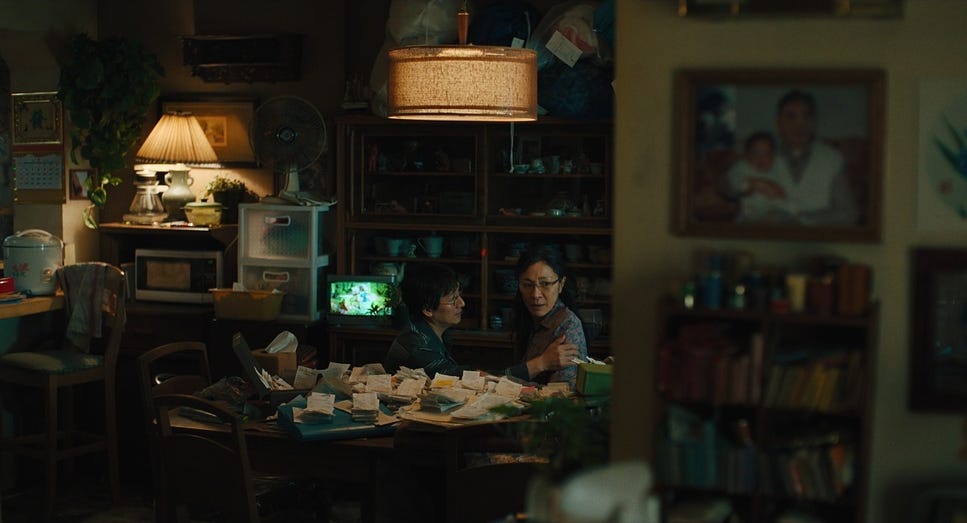
Evelyn Wong is just trying to do her taxes. She lives in an apartment above the laundromat that she owns with her husband Waymond, who instead of taking things seriously like her, puts googly eyes on everything. She’s having to take care of her father who she has a strained relationship with and her relationship with her own daughter, Joy, isn’t much better. On top of all that they’re being audited by the IRS.
But during the family’s meeting at the IRS, something odd happens.
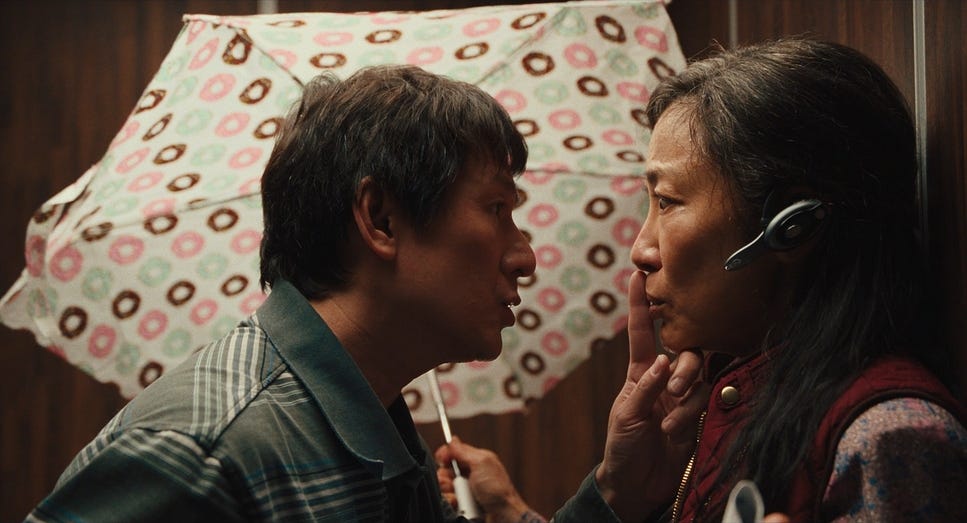
Waymond’s body is suddenly taken over by a different version of himself. He calls himself Alpha Waymond and claims he is from a different universe.
And this is where I think the movie may have lost some people. Just in case you’re one of those people, let me try and clear things up real quick. This movie deals with the concept of the “multiverse”. But it’s just a storytelling device. It’s an idea that allows us to look at certain themes with a new perspective.
Think of the movie Groundhog Day.
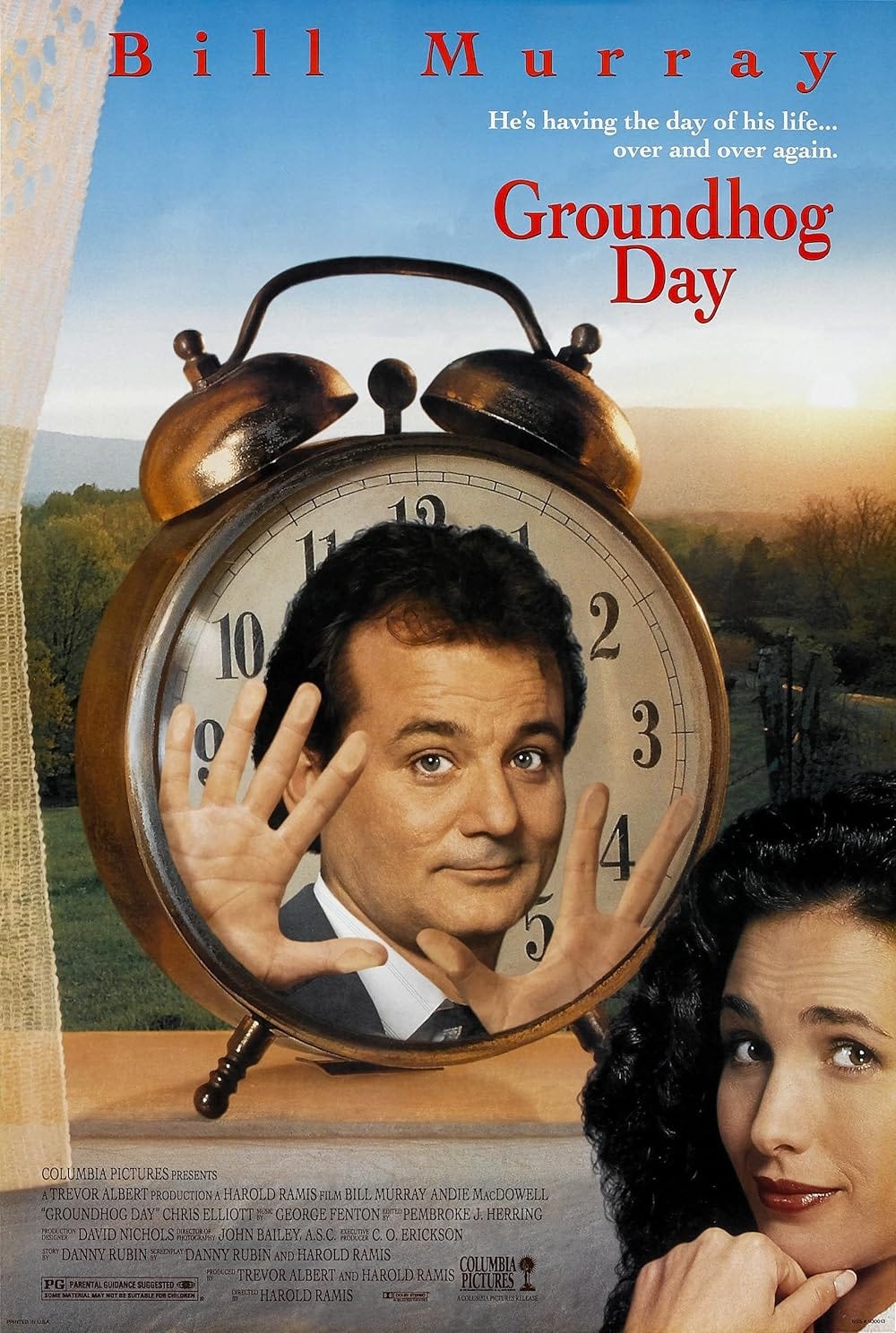
Or ANY of those movies where the characters are stuck in a time loop. They end up having to re-live the same day over and over. It always leads to some interesting scenarios, but it also allows the story to pose questions like, “What would you do if there were no consequences to your actions?”
It’s the same with Everything Everywhere All at Once, except instead of a time loop, we’re using the multiverse to ask thematic questions.
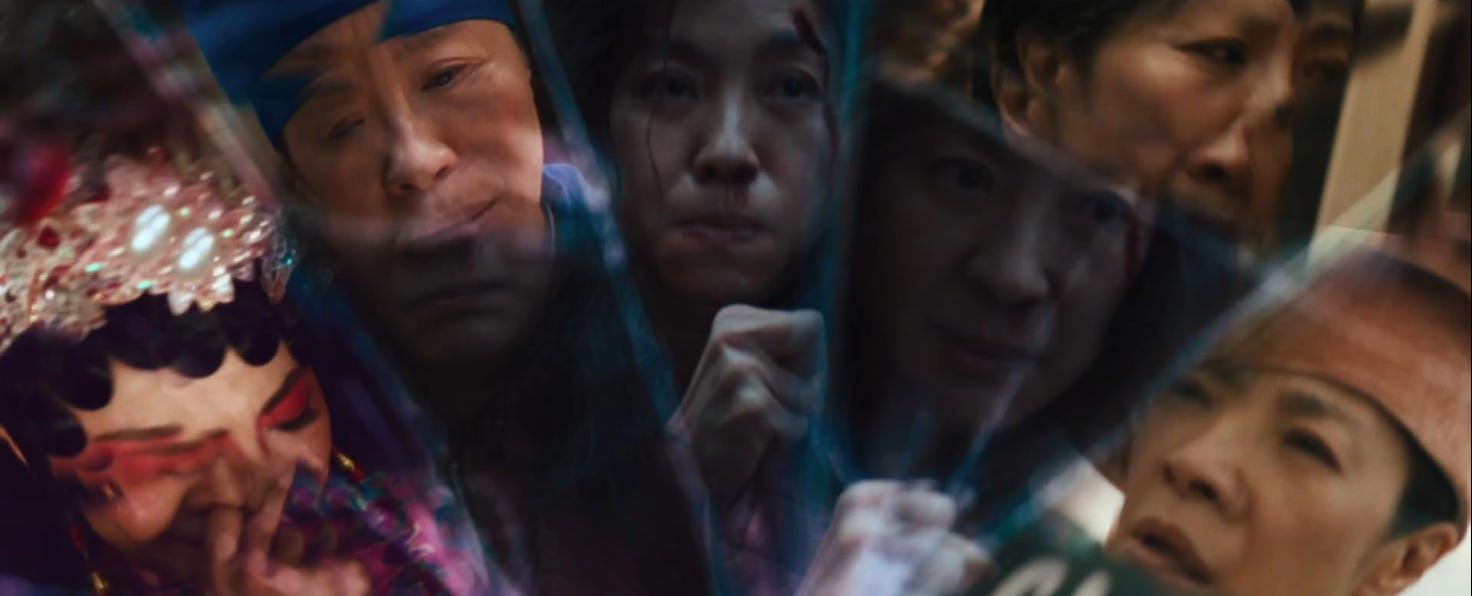
So what exactly is the multiverse? We all make tons of decisions every single day. The multiverse theory says that every time we make a choice there’s an alternate universe where we chose differently. We’ve all wondered at some point in our life what it would be like if we’d made different decisions along the way. How would our life be different?
A multiverse story allows characters to actually SEE what would have happened if they made a different choice, because they can access that alternate universe where they made a different choice.
They can answer questions like: Would I be a different person? Could I have achieved my dreams? Would my life be better?
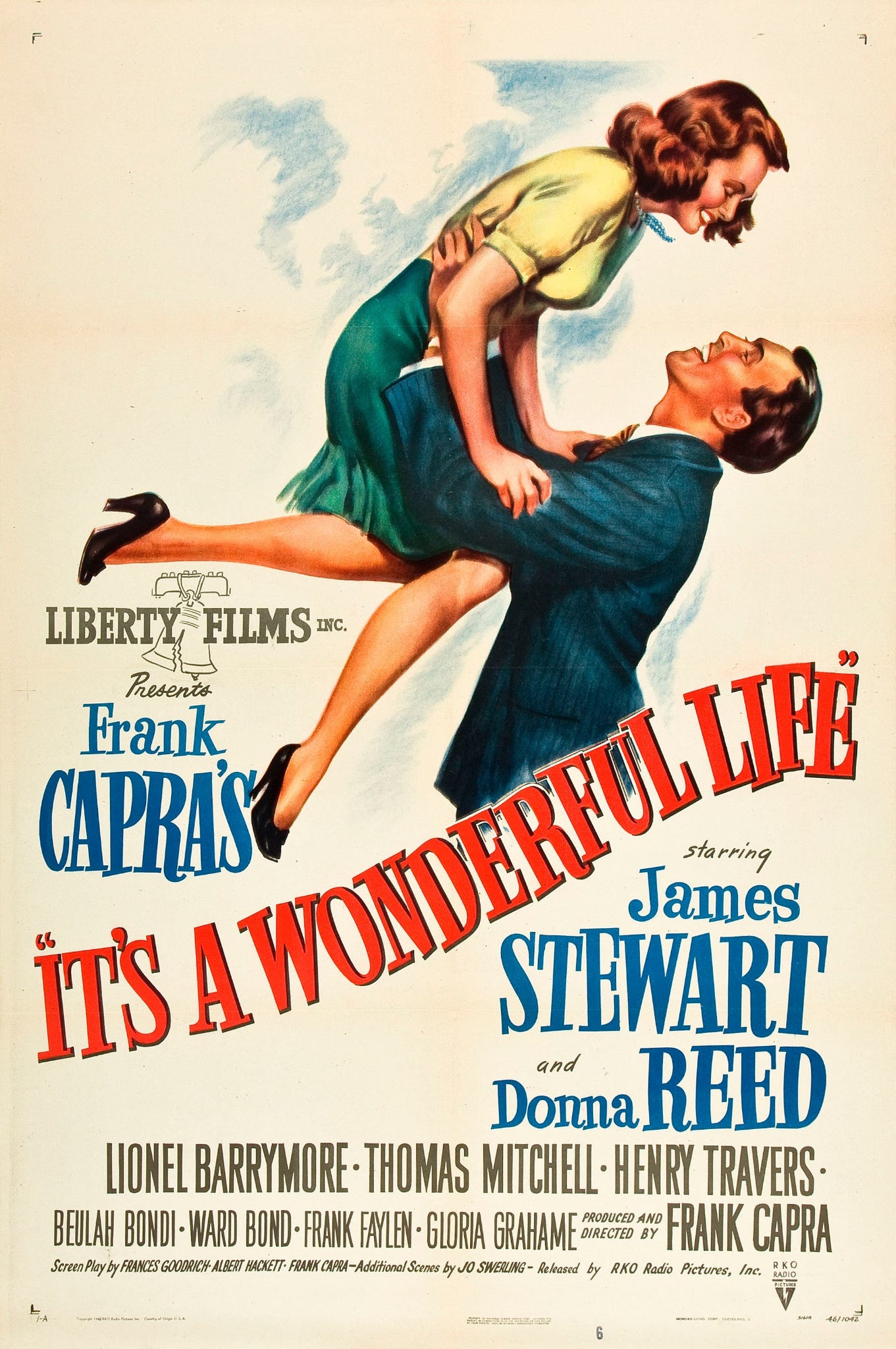
And this might not be as new of an idea as you think. An early version of this kind of story might be It’s a Wonderful Life. George Bailey is able to witness an alternate reality, one in which he doesn’t exist and it allows him to see the impact of his life.
Now let’s take that multiverse concept one step further. Everybody in the world is making choices all day everyday so the number of alternate realities is basically infinite. By extension that means any reality is possible, even really silly ones. Like maybe one where people’s fingers look like hot dogs.
In our reality, we evolved from an ancestor that had hands like ours when it became the dominant species.
But what if there was some reality where that ancestor had fingers that looked like hot dogs, and THEY became the dominant species?

Then humans might have looked like this.

It’s meant to be absurd. The very fact that it’s stupid, directly contributes to the point the movie is trying to make. Because even in a universe as weird and silly as this – the ultimate question still matters.
Everything, Everywhere All At Once uses the multiverse to talk about the daily decision each of us faces between HOPE and DESPAIR.
And just so we’re all on the same page - when I say Hope here, I mean the deliberate choice to believe that life matters. There is meaning, value and purpose. Despair would then be the exact opposite - life has no meaning, purpose or value.
And this story looks at how we all approach this choice differently, especially in the context of generational family relationships. Evelyn is introduced to the multiverse because a version of her daughter from an alternate universe is threatening to destroy EVERYTHING, the whole multiverse.
We learn that this is because that alternate daughter was exposed to so much of the Multiverse that all of those realities became jumbled in her brain. So she was literally experiencing Everything, Everywhere All At Once.
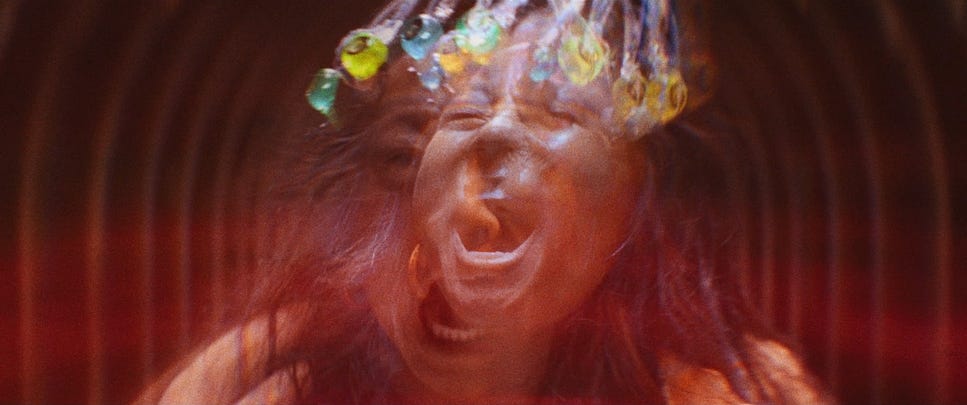
What could we compare that to in real life? What could make a young person feel like this?
One possible example might be how newer generations have grown up with constant access to the internet. People have always had to deal with difficult questions about life. But only in recent generations have we asked those questions while there is also a constant stream of information going directly from a device in our hand, into our brains.
So there’s a generational gap in how we experience the world. On top of that, Joy has grown up having to deal with lots of competing expectations. Her parents are Chinese immigrants and bring that cultural perspective, but she’s raised in the US and influenced by the world around her.
But the hardest thing of all for Joy is that her mother doesn’t seem to love her as she is. Evelyn criticizes how Joy looks, who she chooses to date, what she does with her time.
By doing this Evelyn forces Joy to question all of her decisions in life. Joy has to try and calculate the future consequences of every choice. “If I do that, will my mom be proud of me? If I do this, will I be happy?” It’s as if she’s trying to see into the multiverse.
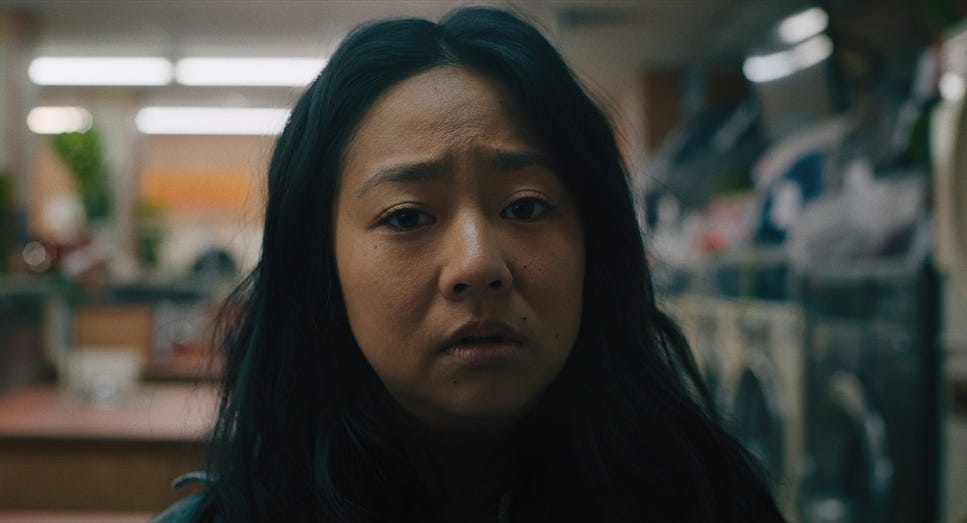
So an alternate version of Joy has a breakdown because she literally experiences everything everywhere all at once, but this version of Joy is figuratively experiencing everything everywhere all at once.
What’s the result of that kind of stress? The alternate Joy forms… the bagel.
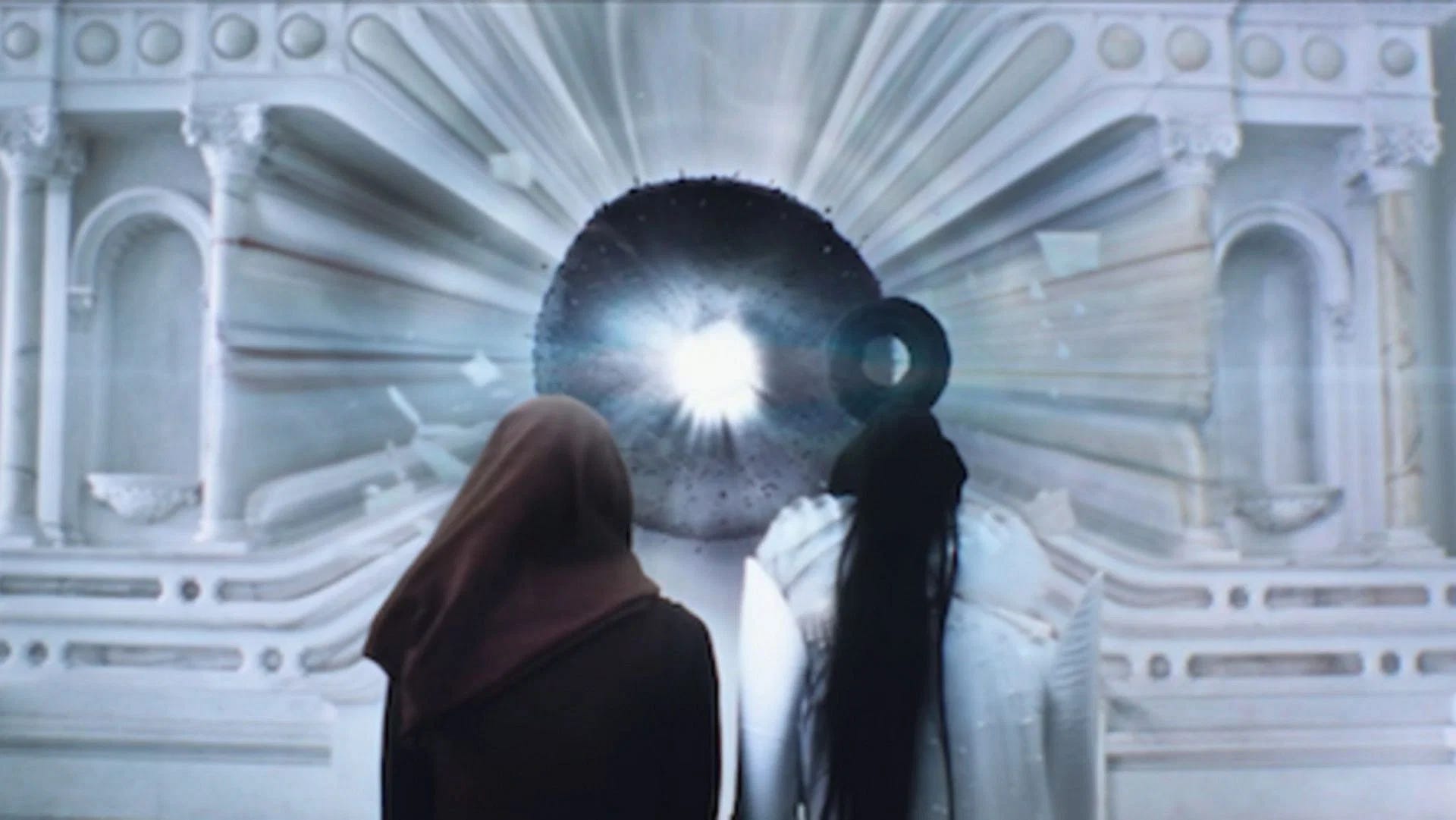
We all know about everything bagels. It’s a bagel with a lot of ingredients on it, but what would happen if you actually put everything on a bagel? It becomes A BLACK HOLE. In the greater analogy here the bagel can represent the feeling Joy has after she tries to make sense of all the complexities and contradictions in her life. It feels like she’s facing a black hole - no purpose, no meaning - just nothingness.
Because of that, Joy adopts a new philosophy - that nothing matters because it’s the only way she can find relief. I’m sure we can all relate. Have you ever gotten so overwhelmed that you just toss your hands up and say “none of this matters, we’re all gonna die anyway.” The bagel becomes a symbol for this idea.
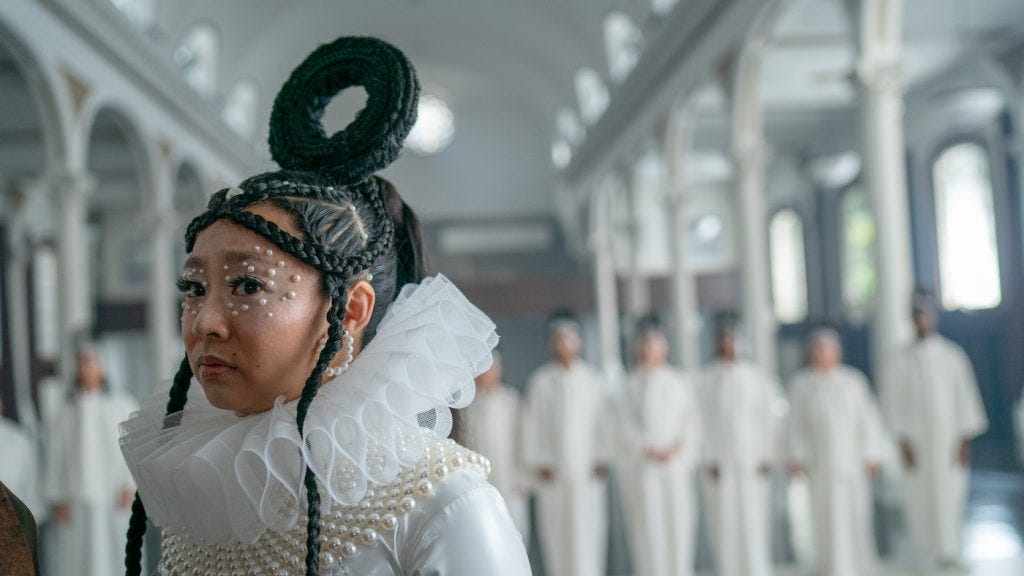
Now we’ve been talking a lot about Joy, BUT the story is not told from Joy’s perspective. This is primarily Evelyn’s story. When Eveyln first learns about her daughter’s new philosophy, she is shocked.
How could Joy believe that life doesn’t matter? So Evelyn tries to convince her daughter otherwise. She blames Joy’s perspective on all kinds of things, but never really listens to Joy. And at the same time, Evelyn is also dealing with a lot. On top of all her previous problems, she has now been forced to confront all of her life choices.
When the alternate version of Waymond brings Evelyn into the multiverse to try and help stop the alternate version of Joy, Evelyn ends up seeing all the different paths her life could have taken.
She could have been a skilled martial artist, or an opera singer, or a famous movie star. But instead she owns a laundromat and is getting audited.

She can’t help but wonder - where did I go wrong? Was it marrying Waymond? Was it leaving home? Was it having Joy?
Under the weight of all this, Evelyn starts to see the appeal in Joy’s philosophy and embraces it. “Nothing matters.” Evelyn then applies that philosophy in all of the realities we’ve been introduced to, no matter how silly they are.
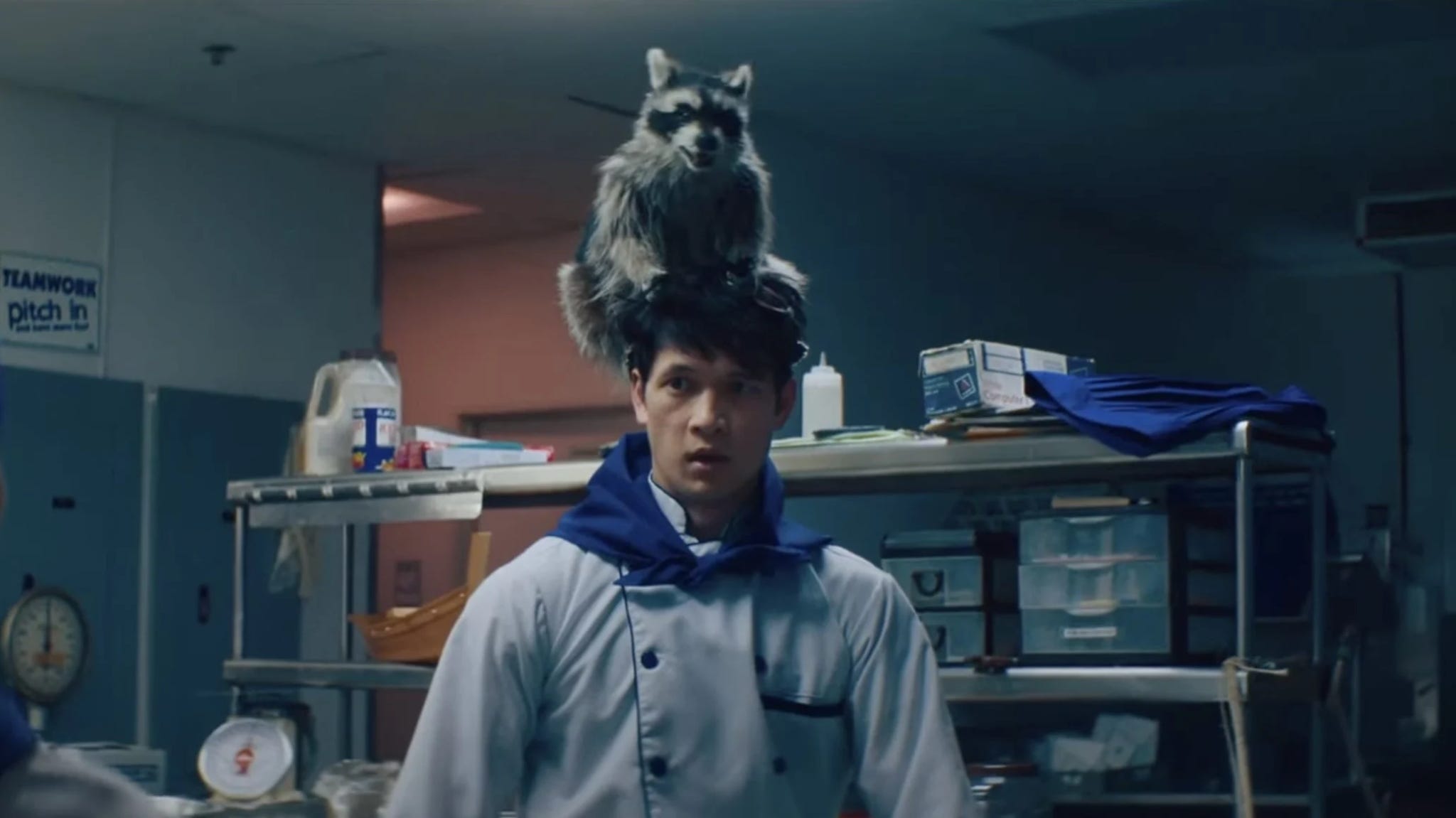
Like one where Evelyn is a chef and discovers that her coworker is in a Ratatouille situation except it’s a Racoon. Evelyn’s belief that nothing matters results in cruelty. As goofy as this universe is, her decision still takes hope out of it.
Once Evelyn starts to believe that nothing matters, Joy reveals that she never actually wanted to destroy everything. She was hoping her mother would convince her that the bagel philosophy was wrong. Because Joy’s real goal isn’t to destroy the multiverse, it’s to destroy herself.
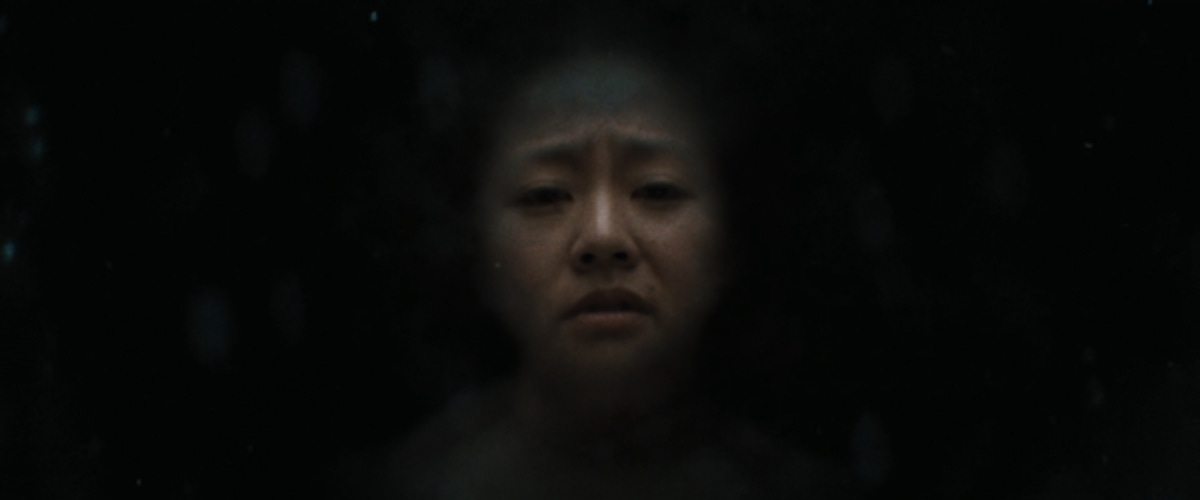
And it seems like there’s really nothing Evelyn can do to stop Joy until she realizes the answer has been staring her in the face this whole time.
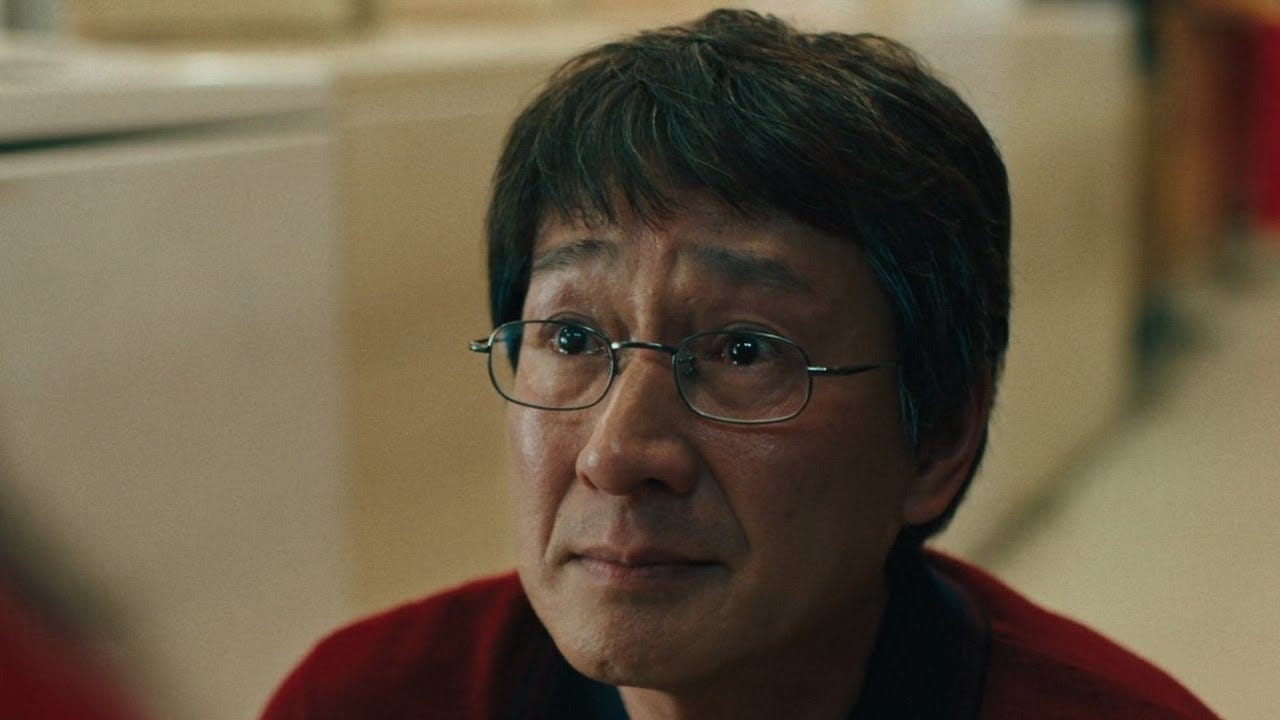
Waymond, who Evelyn has viewed as naive and unhelpful, is somehow, miraculously, fixing things. It’s through Waymond that we are introduced to another philosophy. Waymond has been striving to improve every situation he’s been in through sheer kindness and love. His lack of aggression and anger - it’s not weakness, it’s strength. It’s how Waymond fights the true battle in life.
Because even in a reality where Waymond and Evelyn never married and as a result, both achieved all the worldly success they could hope for - Waymond finds Evelyn and tells her, “In another life, I would have really liked just doing laundry and taxes with you.”
Once Evelyn sees things as Waymond does, she embraces the desire to hope - to believe that even her small decisions actually have an impact on the entire world. She chooses to fight like Waymond does.
She tries to undo the damage she’s done in each universe – even the silly ones, to try and bring hope back into them through her individual decisions to treat people with kindness.
And as a result, this changes Evelyn’s own relationships. She now realizes she needs to love Joy for who Joy is. She starts by processing her own generational trauma. Evelyn confronts some of the reasons she doesn’t love herself. Her own father cut her off when she chose to marry Waymond against his wishes. So she finally deals with this old wound.
But things aren’t always simple. Evelyn has no control over whether or not Joy will choose to forgive her mom. But this is the whole point. If Evelyn’s love is conditional on Joy’s reaction, it would undercut everything she has learned. But she chooses not to repeat the mistakes her own father made. She refuses to let her and Joy’s relationship die. She refuses to stop loving Joy.
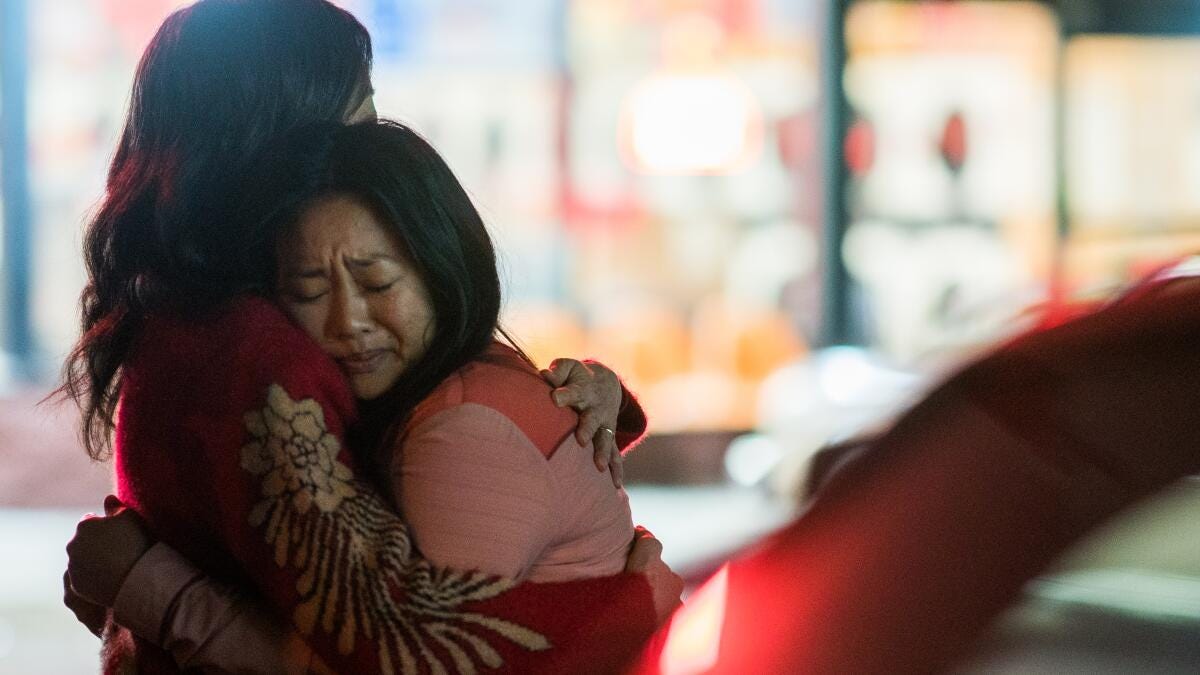
And it’s not a self-righteous love, it’s not a conditional love that believes Joy will change who she is, it’s just loving Joy as she is. This example of love spreads - the whole family hangs onto Joy while she’s at the brink of despair.
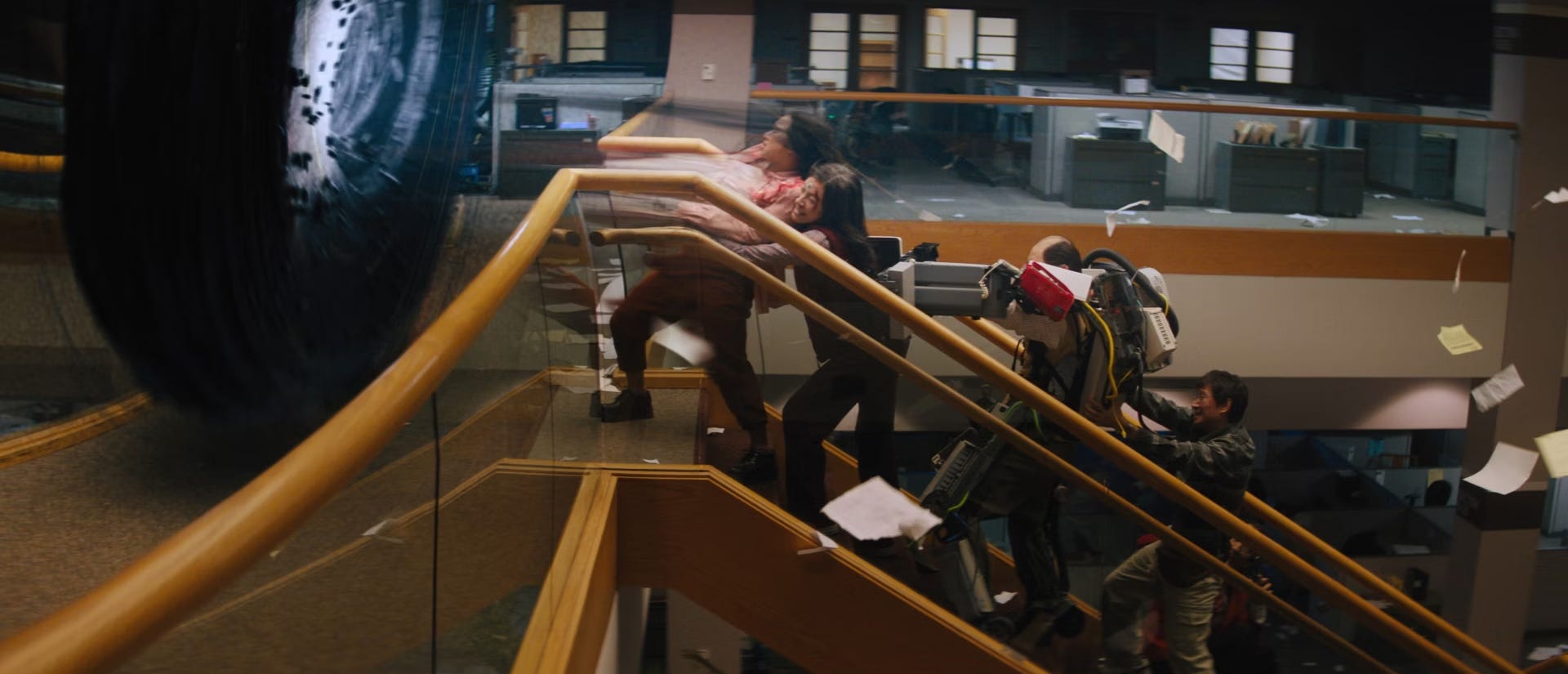
It’s unconditional love and hope. And that is a very hard choice to make. Each and every day even with our smallest actions we have to choose between competing philosophies. It’s a battle to make the hopeful choice and honestly, we’re probably going to lose that battle some days. It’s all the more difficult when we’re so overwhelmed that it feels like we’re experiencing everything, everywhere all at once.
But this story makes the case that it’s a battle worth fighting.

And next week, we’re going to be looking at another movie about competing perspectives…
A Sneak Peek
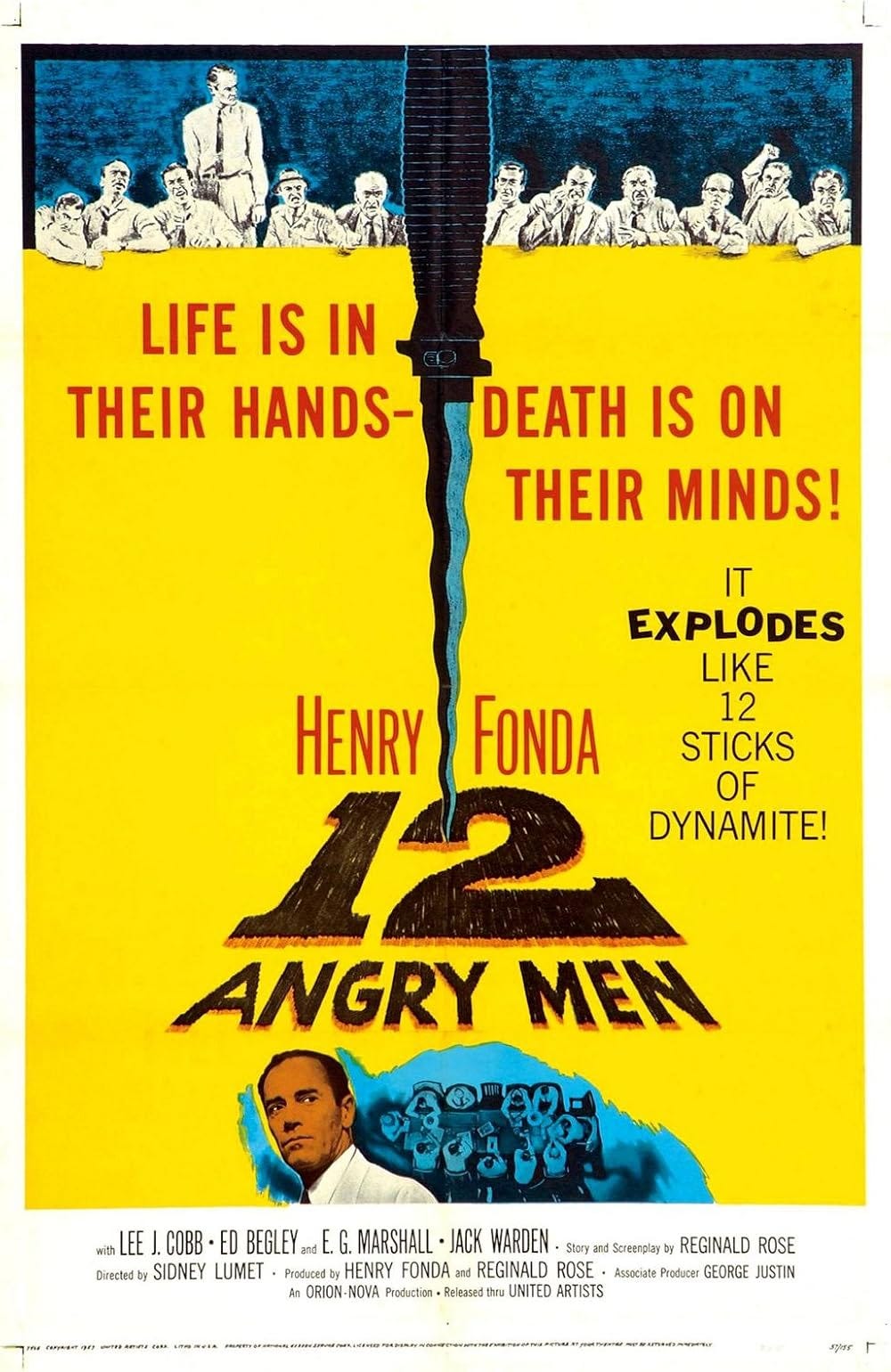
1957’s 12 Angry Men follows the story of a jury deciding whether or not a young man charged with murder is guilty or not.
When it comes to the decision of whether to condemn another human being, 12 men from different backgrounds struggle to leave all their prejudices and preconceived notions at the door to answer the question – has the accused been proved guilty beyond a reasonable doubt?
So here’s some questions to keep in mind while you watch:
Pay attention to how you feel about the case yourself. Do you have a strong opinion on what the vote should be? Does your opinion on the case change as the story progresses?
Do you identify with any of the jurors? Why or why not?
For most of the movie, we don’t know any of the character names. Do you think there’s any significance to this?
Let me know your thoughts on Everything Everywhere All At Once and I’ll see you back here next week to discuss 12 Angry Men!
Hi! I'm new here and I know I'm on the tail end of the Everything Everywhere All At Once week, but I just wanted to say I loved your breakdown of the film. This movie is one of my top 5 of all time, so it means the world to me, and seeing it properly understood and dissected is fantastic. This movie tackles nihilism in way that really hit home for me when I needed it. The bagel being a metaphor for Joy will never not hit me hard. As I myself can feel like an "everything" bagel at times. But specifically Joy's monologue about what happens when "you really put everything on a bagel" is so iconic, the tear streaming down her face as she speaks about how nothing matters is so haunting. Thanks for breaking the film down, I hope it inspired folks to see and love this film the way I do!
I loved this movie